

Cushioned Courts vs. Standard Acrylic Pickleball Surfaces: Comfort, Cost & Performance
If you’ve ever walked off the court feeling great—only to wake up the next morning with sore knees or a stiff back—you’ve already experienced the real debate behind Cushioned Courts vs. Standard Acrylic Pickleball Surfaces. The surface beneath your feet directly affects joint impact, ball speed, fatigue, and even how long you can comfortably play the sport you love.
Not all pickleball courts are built the same. While many players assume every court is simply “painted concrete,” the structure underneath can dramatically change both performance and physical strain. Understanding these differences allows homeowners, clubs, HOAs, and municipalities to make informed decisions that align with player comfort, budget, and long-term durability.
Organizations like USA Pickleball emphasize proper surface texture, slope, and safety standards—but cushioning systems go a step further by addressing long-term joint health and player longevity.
Let’s break it down clearly and professionally so you can determine which surface is right for your project.
Cushioned Courts vs. Standard Acrylic Pickleball Surfaces: Construction and Design Differences
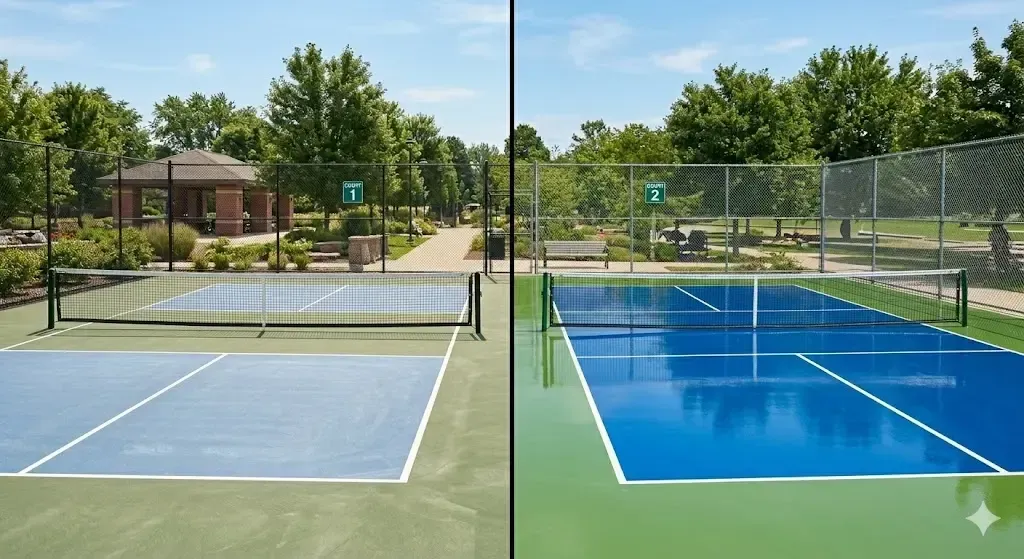
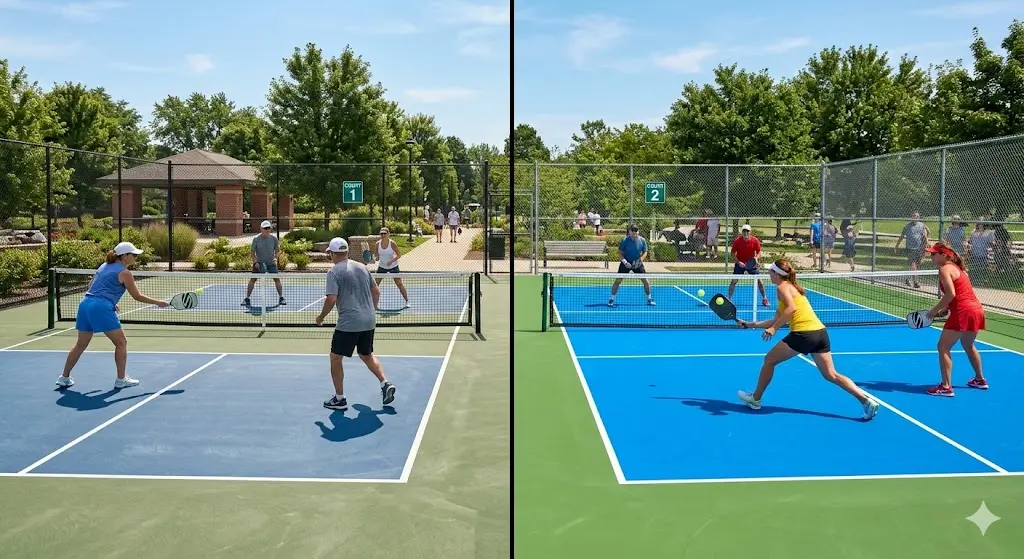
At first glance, both surfaces may look similar. The difference lies in what’s beneath the color coats.
Cushioned Courts vs. Standard Acrylic Pickleball Surfaces: What Is a Standard Acrylic Court?
A standard acrylic court consists of:
A concrete or asphalt slab
Acrylic resurfacer layers
Textured color coats with silica sand
Line striping
This creates a seamless, bonded hard court surface. It delivers:
Fast ball response
Consistent bounce
Strong traction
Long-term durability
Because the system bonds directly to the slab, the surface is rigid and unyielding. That firmness is why acrylic courts are widely used in parks, schools, and competitive facilities.
However, the same rigidity that creates consistent performance also transfers nearly all impact force back into the player’s body.
What Is a Cushioned Court?
A cushioned pickleball court adds multiple rubberized or elastomeric layers between the concrete base and the final acrylic color coats.
These layers:
Contain rubber granules or flexible polymers
Create vertical deflection under impact
Absorb part of the force from running, pivoting, and landing
Think of it as adding a performance midsole—similar to running shoes—built directly into the court.
Companies such as Ace Coatings Sacramento often evaluate player demographics before recommending cushioning systems, especially for communities with high senior participation or frequent league play.
Cushioned Courts vs. Standard Acrylic Pickleball Surfaces: Impact on Joint Health and Player Longevity
This is where the difference becomes meaningful.
Force Reduction Explained
On a standard acrylic court:
Nearly 100% of movement impact returns to the body
Repetitive stress affects knees, ankles, hips, and lower back
Fatigue builds more quickly during long matches
On a cushioned court:
10–20% of impact force can be absorbed (depending on system thickness)
Reduced shock translates to lower joint strain
Players often report less soreness after extended sessions
While a 10–20% reduction may seem modest, over thousands of movements per match, it significantly reduces cumulative stress.
For aging players or those managing prior injuries, cushioning can extend playing years. In competitive facilities, this often translates into:
Longer match sessions
Faster recovery between games
Increased player satisfaction
Professional installers like Ace Coatings Sacramento frequently recommend cushioned systems for clubs aiming to prioritize comfort and long-term member retention.
Ball Speed and Playability
Comfort is critical—but performance matters too.
How Cushioning Changes the Game
A standard acrylic surface:
Produces fast-paced play
Returns ball energy efficiently
Delivers a crisp, responsive feel
Aggressive players who rely on speed and quick drives often prefer this traditional hard-court response.
A cushioned court:
Slightly absorbs ball energy
Marginally slows pace
Provides a fraction more reaction time
The bounce height remains consistent, but ball speed after impact may feel slightly moderated.
For recreational leagues and multi-generational facilities, this subtle difference can actually improve gameplay balance, especially in mixed-skill environments.
Surface Texture Still Matters
It’s important to note:
Texture is controlled by sand content in acrylic layers
Both cushioned and standard courts can be customized
Grip and traction remain comparable when installed correctly
The primary difference remains vertical shock absorption—not surface roughness.
Cost Considerations: Is Cushioning Worth the Investment?
Budget is often the deciding factor.
Standard Acrylic Court Costs
Lower upfront installation expense
Fewer material layers
Faster application process
This makes standard acrylic the most common public installation option.
Cushioned Court Costs
Higher material investment
More labor-intensive installation
Additional rubberized layers
While initial installation costs are higher, long-term value depends on your priorities.
If the goal is maximizing the number of courts within a fixed budget, standard acrylic is typically more practical.
If the goal is player comfort and premium experience, cushioning often justifies the additional expense.
Maintenance requirements are similar for both systems, including:
Cleaning
Periodic resurfacing every 5–8 years
Crack repair (if slab movement occurs)
The cushioning layer itself does not eliminate the need for proper sub-base preparation and drainage.
Decision Guide: Which Surface Is Right for You?
The right answer depends on who will use the court and how often.
Choose Standard Acrylic If:
You need a cost-efficient solution
You prefer a faster, tournament-style surface
The court is for public or multi-use facilities
Budget constraints are a primary concern
Choose Cushioned Courts If:
Player comfort and joint health are top priorities
The primary players are seniors or high-frequency competitors
You want a premium, club-level amenity
Reducing fatigue and injury risk matters long-term
Both systems can meet professional performance standards when installed correctly.
The key is aligning the surface with your facility’s long-term goals.
Final Thoughts: Playing Today vs. Playing for Decades
The debate between cushioned and standard acrylic courts is not about which is “better.” It’s about what you value more—maximum speed and lower upfront cost, or enhanced comfort and long-term joint protection.
For players who log hours on the court every week, surface choice can influence longevity in the sport. For facility managers, it can impact member satisfaction and retention.
If you’re considering a new build or resurfacing project and want expert guidance tailored to your location, climate, and player base, professional consultation is essential.
Contact us at Ace Coatings Sacramento today to schedule a court evaluation and discuss the best surface solution for your pickleball project. Let’s build a court that performs at a high level—while protecting the players who use it.
