


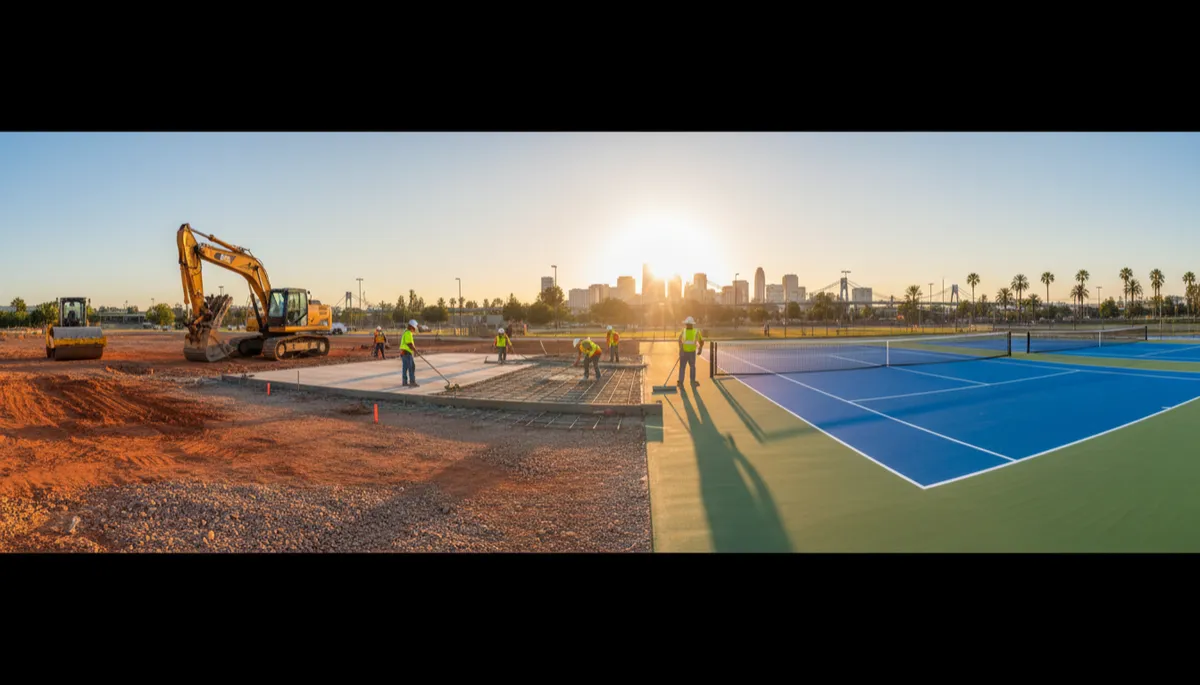
Tennis Court Construction in Sacramento
Home Improvement, Sports Courts, Sacramento
Full Tennis Court Construction in Sacramento: From Empty Yard to Finished Court
If you’re a homeowner in the Sacramento area dreaming of a private tennis court, you probably want to understand what full tennis court construction from start to finish really involves, how long it takes, what it costs, and who handles each step locally. Whether you’re looking for full tennis court construction from start to finish in Sacramento or just starting to research options, this guide walks you through every major phase so you know exactly what to expect on your property, from first idea to final line painting.
Is a Private Tennis Court in Sacramento Right for You?
Sacramento’s sunny, dry climate is ideal for outdoor tennis. With relatively mild winters and long, warm seasons, a well-built court can be used most of the year with minimal weather-related downtime. Before committing, think about how often you play, whether you host friends or coach lessons, and how a court might affect your property value and lifestyle. Many local homeowners see their court as both a personal training space and a long-term investment in their home.
Planning and Design: Laying the Groundwork for Success
Every successful tennis court in Sacramento starts with thoughtful planning. At this stage, you and your court specialist discuss how you’ll use the court, your budget, and site limitations. Standard doubles courts are 60 feet wide by 120 feet long, but you’ll also need additional space for fencing, access paths, and, ideally, some spectator or seating areas.
Orientation: Courts are usually aligned north–south to reduce sun glare during morning and late-afternoon play, which is especially important under Sacramento’s bright skies.
Access and parking: Consider how players, guests, and maintenance crews will reach the court without disturbing the rest of your yard.
Lighting and utilities: If you want night play, your design should include conduit and power for LED court lighting from the outset.
This is also the time to decide whether you’d like multi-sport options, such as adding pickleball lines or a basketball key. For those considering pickleball, construction standards from organizations like USA Pickleball can help guide dimensions and layout if you’re planning a hybrid court.
Permits, Zoning, and Local Sacramento Considerations
Before any soil is moved, your project must comply with local zoning rules, setback requirements, and, in some neighborhoods, HOA guidelines. In the Sacramento region, this may include rules about fence height, lighting spillover, drainage, and noise. A knowledgeable contractor will help you navigate:
Site surveys to confirm property lines and easements
Permit applications for grading, concrete, and electrical work where required
Coordination with inspectors to keep the project on schedule
Handling these steps correctly up front prevents costly changes later and ensures your new court is fully compliant and insurable once complete.
Site Preparation and Grading: Building on Solid Ground
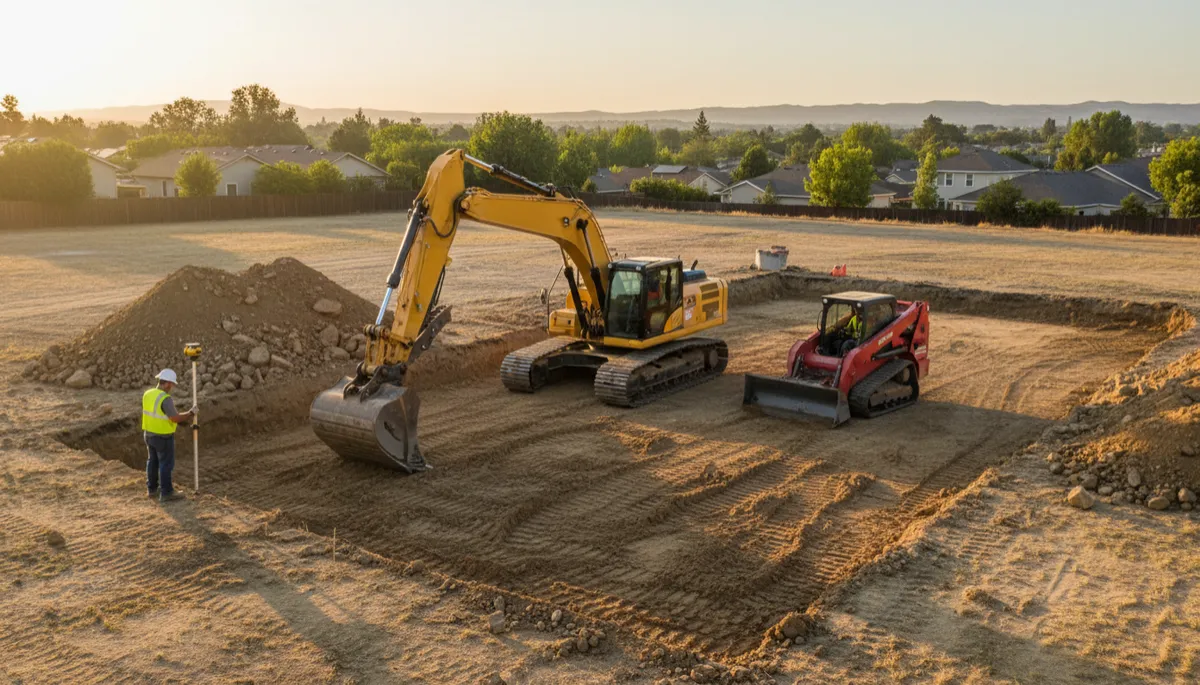
Sacramento’s varied soil conditions make professional grading essential. To avoid cracks, puddling, and surface failures, the subgrade must be stable, compacted, and sloped correctly for drainage. Typically, builders will:
Clear vegetation, topsoil, and any existing structures within the court footprint
Excavate to the required depth and compact the soil in layers
Install a crushed rock base, graded to a subtle slope (often around 1%) so water drains off the court without affecting play
In an area that experiences both hot summers and occasional winter storms, like Sacramento, this attention to base preparation is one of the most important factors in how long your court will last and how good it feels underfoot.
Concrete or Asphalt Slab: The Structural Foundation of Your Court
Once the base is ready, a reinforced concrete or asphalt slab is installed. This structural layer provides the flat, stable platform required for a high-performance playing surface. For Sacramento homeowners, concrete is often preferred because it offers long-term durability and resists deformation in heat.
Reinforcement: Steel rebar or mesh helps control cracking and adds strength.
Expansion joints: Properly placed joints allow the slab to move slightly with temperature changes, reducing random cracks.
Cure time: The slab must cure fully before coatings are applied, which can take several weeks depending on weather.
Skipping or rushing these steps can lead to uneven bounce, standing water, and premature surface failure—problems that are expensive to fix later.
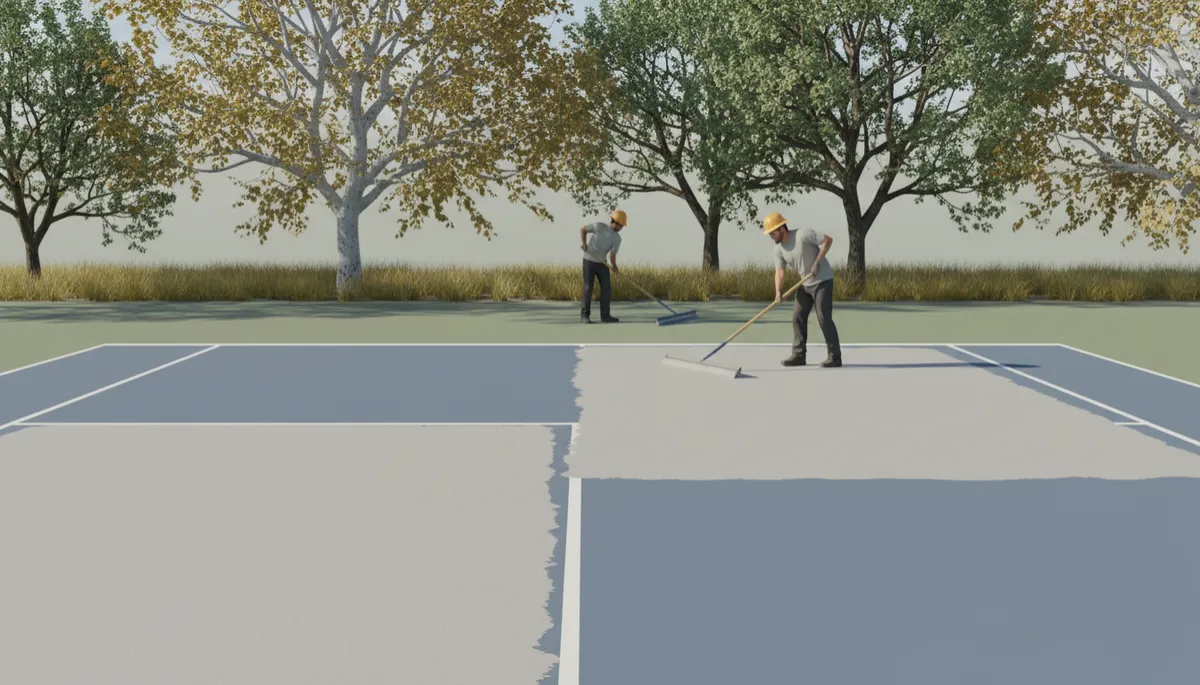
Quality acrylic coatings create consistent bounce, traction, and color that last for years.
Acrylic Surfacing and Cushion Systems: How the Court Actually Plays
After the slab has cured and been checked for flatness, it’s time for the color and performance layers. This is where specialists like Ace Coatings Sacramento bring the court to life with professional acrylic surfacing systems designed for Sacramento’s climate.
Multiple coats are applied to build up texture, color, and grip. You can choose traditional green and blue combinations or more neutral palettes that blend with your home and landscaping. For players seeking extra comfort, cushioned systems add resilient layers between the slab and topcoat, reducing joint impact without sacrificing ball response.
Lines, Net Posts, and Hardware: Finishing Details That Matter
With the surface cured, precise striping is applied for singles and doubles play using high-contrast, UV-resistant paint. Accurate line layout is critical for fair play and a professional look. At this stage, installers also:
Core-drill and set net posts in concrete footings
Install center strap anchors and net tension hardware
Add any additional game lines, such as pickleball or short-court practice markings, if requested
These details turn a colored slab into a regulation-ready court that feels and looks like what you see at clubs and tournaments.
Fencing, Lighting, and Accessories: Completing the Court Environment
A full tennis court construction from start to finish in Sacramento rarely stops at the playing surface. Perimeter fencing keeps balls in play and adds safety, while wind screens can improve visibility and comfort on breezy days. Many homeowners also choose:
LED lighting systems designed to minimize glare and light spill into neighboring properties
Benches, shade structures, and small seating areas for guests or coaching
Ball hoppers, storage boxes, and hose bibs for easy cleaning and maintenance
Thoughtful accessory choices can make your court more inviting and easier to care for, encouraging you to play more often and host more matches.
Timeline and Maintenance: What Sacramento Homeowners Can Expect
From first consultation to final net tightening, most residential tennis court projects take several weeks to a few months, depending on permitting, weather, and the complexity of your design. Sacramento’s generally dry climate often helps keep schedules predictable, but curing times for concrete and coatings still need to be respected.
Once your court is complete, routine maintenance is straightforward: periodic cleaning, debris removal, and occasional touch-ups to high-wear areas. Over the years, resurfacing helps maintain color, traction, and play quality. Working with a local specialist familiar with Sacramento’s sun exposure and temperature swings ensures you get realistic guidance on how often resurfacing will be needed.
Choosing the Right Sacramento Partner for Your Court
Because a tennis court is a significant investment, partnering with an experienced, locally focused company is essential. When you speak with Ace Coatings Sacramento you’re working with professionals who understand regional soil conditions, weather patterns, and permitting requirements—and who specialize in high-performance acrylic sport surfaces.
They can guide you through every stage, from initial design ideas and color selections to final walk-through and long-term maintenance planning, so your court feels tailored to your home and playing style rather than a generic, one-size-fits-all layout.
Bringing Your Sacramento Tennis Court Vision to Life
Full tennis court construction from start to finish in Sacramento is a detailed, multi-step process, but with the right team, it’s also a rewarding transformation of your property. From the first site visit and design sketches to the moment you hit your opening serve on a freshly coated surface, each phase has a clear purpose: safety, durability, and an enjoyable playing experience for years to come.
If you’re ready to explore what a private court could look like on your property, the next step is a conversation with local experts who can evaluate your space, explain options, and provide a realistic timeline and budget. When you’re looking for full tennis court construction from start to finish in Sacramento , connecting with a dedicated Sacramento-based sport surface specialist is the most reliable way to turn your vision into a playable, long-lasting reality.
