


Ideal Pickleball Court Layout Guide
A better backyard court starts with the ideal pickleball court layout, not just a tape measure and a few painted lines. For homeowners, schools, clubs, and community spaces in the Sacramento area, the right layout determines how safely players move, how consistently the ball responds, and how enjoyable the court feels during everyday play. A professional layout also helps prevent common issues such as cramped run-off areas, sun glare, drainage problems, and awkward fencing placement.
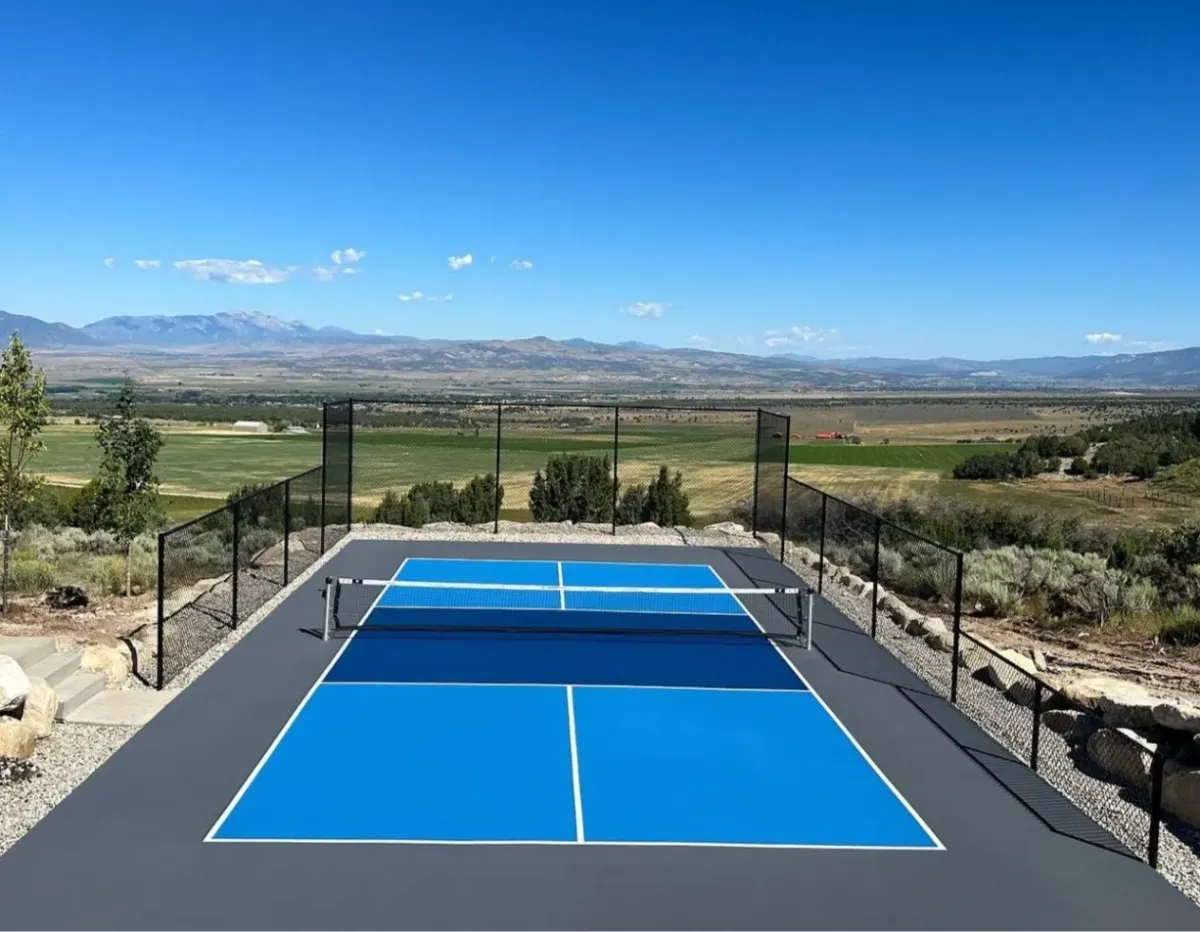
Pickleball may use a compact playing surface, but that does not mean every flat slab is ready for permanent court construction. The official painted court is only 20 feet wide by 44 feet long, which makes the game accessible for residential properties and shared recreation spaces. However, the usable footprint should be larger than the painted lines because players need room to chase shots, recover their balance, and move safely around the court.
This is where good planning matters. A court that technically fits can still feel uncomfortable if the baselines are too close to a fence, the sideline clearance is too tight, or the afternoon sun sits directly in a player’s eyes. Before surfacing begins, the entire space should be evaluated as a playing environment, not just a rectangle on the ground.
For Sacramento properties, heat, sun exposure, surface temperature, drainage, and long-term coating durability should all influence the design. Ace Coatings Sacramento understands that a successful court layout must balance regulation measurements with real-world property conditions, especially when converting driveways, backyards, schoolyards, or existing pavement into playable courts.
Why the ideal pickleball court layout starts with the right footprint
The standard pickleball playing area measures 20 feet by 44 feet. This includes both singles and doubles play, meaning the court size does not change based on the number of players. That compact footprint is one reason pickleball has become so popular: it creates quick rallies, keeps players engaged, and makes the game accessible to a wide range of ages and skill levels.
However, the painted court is only the beginning. A safe and comfortable court also needs clearance beyond the lines. Players often backpedal behind the baseline, step wide during angled shots, and move quickly toward the kitchen during volleys. Without adequate run-off space, the game can feel restricted and unsafe.
As a practical planning guide, many recreational courts work best when the total space is at least 30 feet by 60 feet. This allows about 5 feet of sideline clearance and roughly 8 feet beyond each baseline. If more room is available, a 34-by-64-foot footprint creates better comfort and movement. Competitive or tournament-style layouts may use even more space, often closer to 40 by 80 feet.
When evaluating a site, do not measure only the open slab. Look at what surrounds it. Fences, retaining walls, planters, trees, garage doors, light poles, and property lines can all affect play. A court may fit on paper but still feel cramped if players are forced to stop short during normal movement.
How the ideal pickleball court layout improves movement and safety
A well-planned layout gives players enough room to react naturally. This is especially important behind the baselines, where deep serves and high returns often push players backward. If the fence is too close, players may hesitate, shorten their swing, or risk backing into a barrier.
Sideline clearance is equally important. Wide dinks, angled volleys, and defensive stretches can pull players outside the court. Even casual players need space to step beyond the line without landing in landscaping, gravel, or uneven pavement.
Good layout planning should consider:
Baseline run-off for deep shots and recovery
Sideline clearance for angled play
Gate placement that does not interrupt movement
Fence distance from active play zones
Net post location and player circulation
Nearby walls, steps, drains, or landscape features
Spectator or seating areas, if needed
Surface levelness should also be reviewed before construction. A court does not need to be perfectly flat, but it does need a controlled slope for drainage and a smooth surface for predictable bounce. Low spots can hold water, while uneven areas can cause the ball to skip or die unexpectedly. Professional installers evaluate these details before coating because the surface system can only perform as well as the base beneath it.
How the ideal pickleball court layout organizes lines, zones, and play
Once the footprint is confirmed, the court markings must be precise. Pickleball is a game of angles, timing, and controlled movement. A few inches may not seem like much during layout, but inaccurate lines can change how serves land, how players position themselves, and how fair the court feels.
The court is divided into two equal halves by the net. Each side measures 20 feet wide by 22 feet deep. From the net, the non-volley zone extends 7 feet back on both sides. This area is commonly known as the kitchen, and it plays a major role in pickleball strategy.
The remaining 15 feet between the kitchen line and baseline forms the backcourt. A centerline divides that backcourt into two service boxes, each measuring 10 feet wide by 15 feet deep. Serves must travel diagonally into the correct service box, clearing the kitchen area.
These measurements are straightforward, but accuracy matters. Lines should be square, symmetrical, and clearly visible. When converting an existing slab or driveway, installers often verify diagonals to confirm the layout is not skewed. A court that is slightly out of square may still look acceptable from a distance, but players will notice the difference during serves and rallies.
Why the ideal pickleball court layout depends on kitchen accuracy
The kitchen is one of the defining features of pickleball. It prevents players from standing directly at the net and smashing every ball downward, which keeps the game more strategic and accessible. Instead of rewarding only power, the layout encourages patience, placement, soft shots, and controlled footwork.
Kitchen accuracy is important because the line itself is part of the non-volley zone. If a player touches that line while volleying the ball, it is considered a fault. For that reason, the 7-foot measurement from the net must be consistent across the full width of the court.
A properly marked kitchen helps players develop better habits. They learn where to reset after a shot, how to approach the line without stepping into a fault, and when to let the ball bounce. For families or community courts, this clarity makes the game easier to teach and more enjoyable for beginners.
Service box accuracy matters as well. Each service area should be evenly divided so players on both sides receive the same angles and distance. A clean centerline from the kitchen to the baseline supports fair play and helps the court feel professional.
USA Pickleball provides recognized standards for court dimensions, but a strong installation also accounts for site-specific conditions such as space limitations, surface type, fencing, and lighting.
Building the ideal pickleball court layout for Sacramento conditions
Sacramento’s climate makes orientation and surfacing especially important. Hot summers, bright sun, and long daylight hours can affect both player comfort and court performance. A layout that ignores sun direction may be difficult to use during morning or late-afternoon play, even if the measurements are technically correct.
Whenever possible, the long axis of the court should run north to south. This helps reduce the chance of players looking directly into the rising or setting sun. Some properties cannot support a perfect north-south layout, but even a thoughtful adjustment can improve visibility. If the court must run east to west, owners may need to plan play times more carefully or consider windscreens, shade planning, or other glare-reduction strategies.
Surface selection also matters. Raw concrete may seem playable at first, but it is not an ideal long-term sports surface. It can become slick with dust, reflect heat, create inconsistent bounce, and wear unevenly. Acrylic court coatings are designed to provide controlled texture, better traction, UV-resistant color, and a more consistent ball response.
For permanent courts, the coating system should be chosen based on use level, budget, and comfort goals. A standard acrylic surface can provide excellent playability for residential and recreational courts. Cushion systems may be preferred when players want added shock absorption and a more forgiving feel underfoot.
Ace Coatings Sacramento can help property owners think through these decisions before construction begins, including whether the site is better suited for a dedicated pickleball court, a multi-sport layout, or a conversion of an existing paved area.
Planning the ideal pickleball court layout with fencing, lighting, and surfacing
A finished court should feel contained, visible, and easy to use. Fencing helps keep balls in play and protects nearby landscaping, windows, vehicles, or neighboring areas. For many backyard and recreational courts, fencing height and placement should be planned around both containment and player safety.
Lighting should be designed with the same care. Poorly placed lights can create glare, shadows, or uneven visibility. Poles should not be placed directly behind baselines where players look up for lobs or overheads. Instead, lighting should be positioned to spread illumination evenly across the court while minimizing spillover to nearby properties.
When planning the finished space, consider:
Fence height and distance from the court
Gate location and access path
Windscreens for visibility, wind control, or privacy
Lighting pole placement and beam direction
Surface color contrast for better ball tracking
Seating, shade, or storage near the court
Drainage around the perimeter
Long-term maintenance access
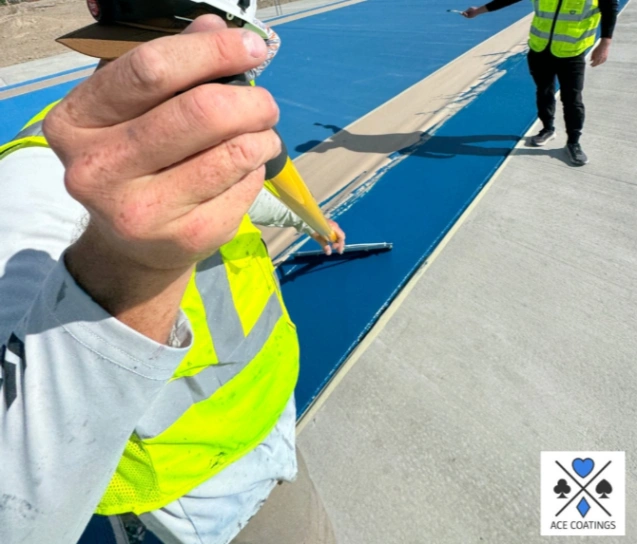
Temporary layouts can be useful for testing a space before investing in permanent surfacing. Painter’s tape or removable court tape can help homeowners visualize dimensions, kitchen placement, and clearance. However, temporary tape should not be treated as a substitute for professional layout if the goal is a permanent court. Permanent striping requires surface preparation, accurate measurement, durable coatings, and clean line application.
The best courts are easy to use because the planning feels invisible. Players have room to move. The sun is manageable. The ball bounces consistently. The lines are clear. The fencing supports the game without feeling too close. The surface grips without being abrasive. All of those details begin with layout.
A pickleball court can turn an ordinary backyard, driveway, school area, or community space into a reliable gathering place. But the quality of the experience depends on the decisions made before the first coating is applied. Measure beyond the lines, plan for safe movement, orient the court thoughtfully, and choose a surface system designed for real play.
With careful planning and expert installation, Ace Coatings Sacramento can help create a court that looks professional, plays consistently, and supports years of matches with family, friends, neighbors, or club members.
