


Choosing the Right Court Builder for Tennis and Pickleball Projects
A well-built court can turn a backyard, club, school, or community space into a lasting recreation asset, but choosing among tennis and pickleball court builder companies requires more than comparing prices. The right partner should understand court engineering, player safety, drainage, acrylic surfacing, local site conditions, and how Sacramento’s heat and seasonal weather affect outdoor athletic surfaces.
Tennis and pickleball continue to grow because they are social, active, and adaptable for many age groups. For homeowners, a private court can support family time and fitness. For HOAs, parks, schools, and clubs, a well-planned court can increase participation and make better use of existing space. But a court is only as reliable as the planning and construction behind it.
A quality court is not just a slab with lines. It is a layered sports system that depends on grading, base stability, drainage, surfacing, layout accuracy, and long-term maintenance. When these details are handled correctly, the result is safer movement, consistent ball response, better traction, and years of dependable play.
What tennis and pickleball court builder companies should plan before construction
Every successful court starts with a detailed site review. Before excavation, grading, or concrete work begins, the space should be evaluated for dimensions, slope, access, sunlight, soil conditions, drainage, and surrounding structures. These early decisions affect both construction cost and long-term performance.
For tennis, a full court requires a much larger footprint than the playing lines alone. Pickleball courts need less space, but they still require adequate runoff area around the court for safe play. Multi-sport courts need even more thoughtful planning because line placement, net systems, fencing, and player movement must all work together.
Key planning considerations include:
Available court footprint and safe overrun space
North-south orientation to reduce sun glare
Property setbacks and local code requirements
HOA or community approval rules
Drainage paths and stormwater control
Access for construction equipment
Fencing, gates, and privacy needs
Lighting placement and neighbor impact
Future maintenance access
Sacramento-area projects can involve a wide range of settings, from suburban residential lots to school campuses, community recreation areas, and private clubs. In each case, the court should be designed around how people will actually use it. A family court may prioritize flexible play and comfort. A club or community court may need durability, clear circulation, and multiple courts with consistent layouts.
Ace Coatings Sacramento can help property owners think through these details before construction begins, which is important because layout mistakes are expensive to correct once the base is installed.
How tennis and pickleball court builder companies handle layout, permits, and site access
Permitting and site access are often underestimated. Depending on the property and municipality, a court project may need review for grading, drainage, lighting, fencing height, lot coverage, or setbacks. Properties governed by HOAs may also require design approval before work can begin.
Court orientation should be addressed early. A north-south layout is often preferred because it helps reduce direct sun in players’ eyes during morning and late afternoon play. This is especially useful in Sacramento, where long sunny seasons can make glare a real comfort and performance issue.
Access is another practical factor. Construction crews need room for equipment, materials, base preparation, and surface installation. If the court is in a backyard with limited access, that can affect the project timeline and cost. Planning ahead helps avoid delays, protects landscaping where possible, and keeps the work sequence efficient.
How tennis and pickleball court builder companies design durable playing surfaces
The base is the most important part of the court. If the base moves, cracks, holds water, or settles unevenly, the finished surface will eventually show those problems. That is why professional court construction requires more technical planning than standard flatwork.
Many court projects use asphalt or concrete foundations. Asphalt can be cost-effective and is commonly used for sports courts, but it can oxidize, soften in heat, and crack over time if drainage or base preparation is poor. Concrete can provide excellent stability when properly designed, and post-tension concrete may be used for projects where long-term crack resistance is a priority.
Regardless of base type, proper preparation includes:
Excavation and grading
Soil evaluation and compaction
Aggregate base installation
Controlled slope for drainage
Edge planning and containment
Proper curing before coating
Surface preparation before acrylic application
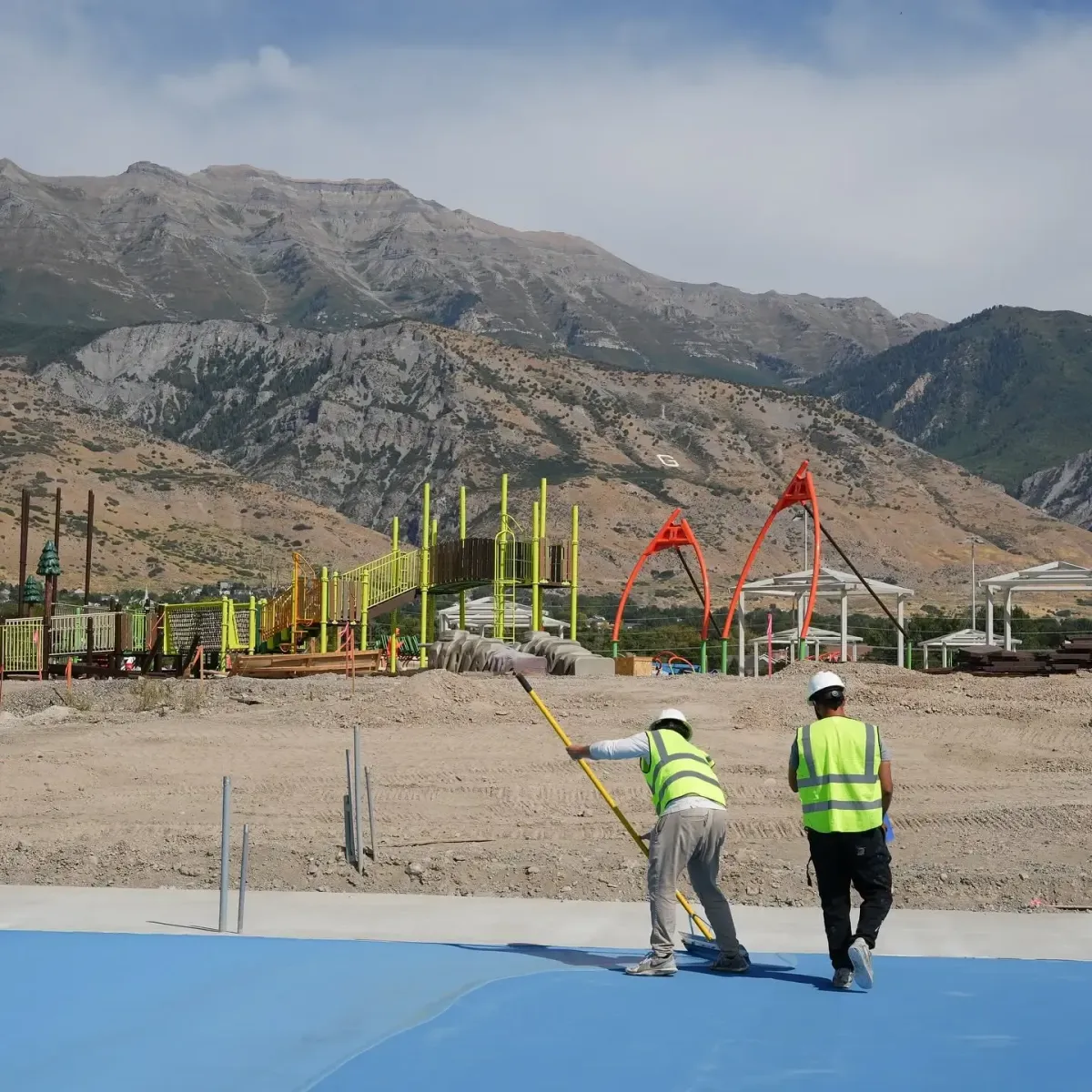
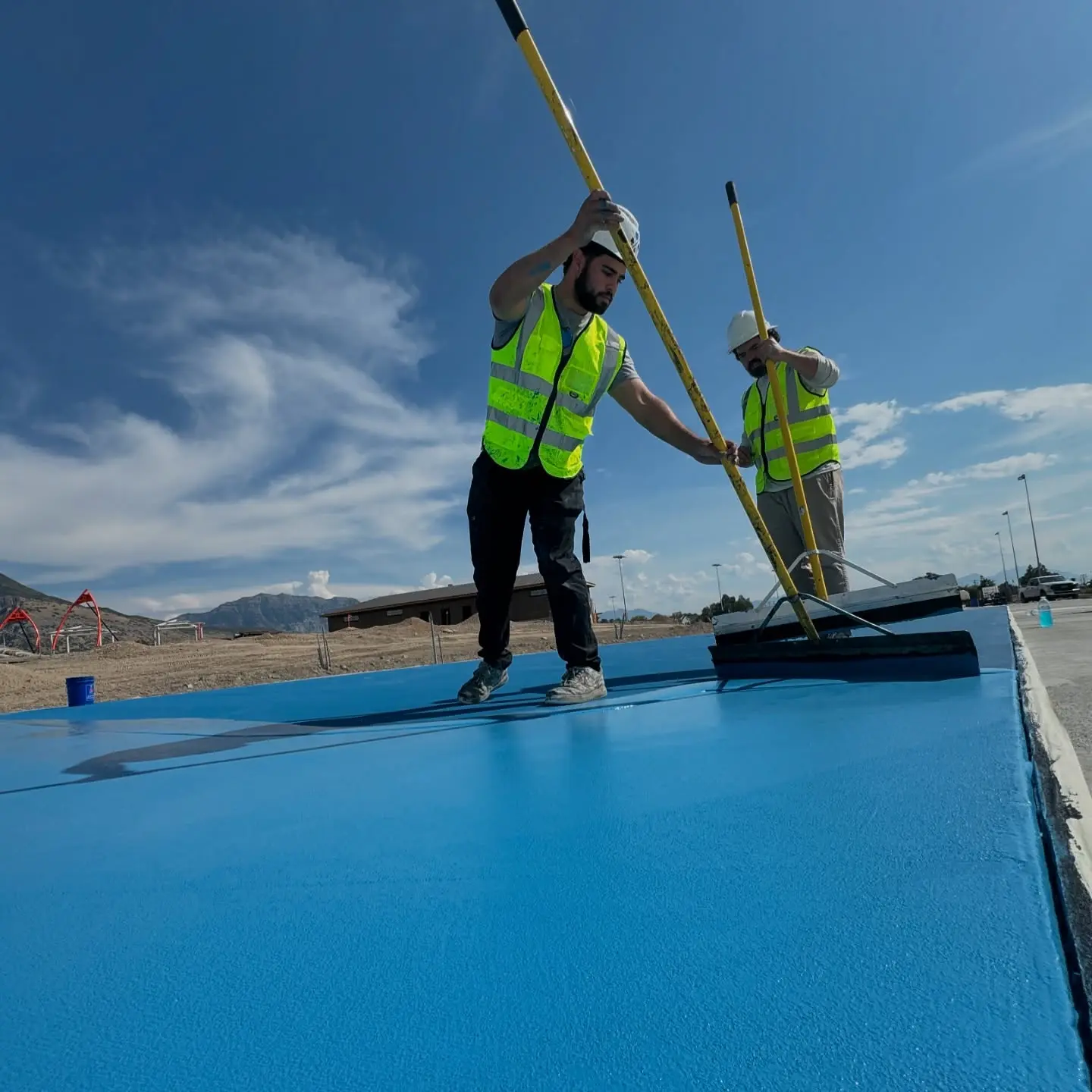
Once the base is ready, the sports coating system creates the playing experience. Acrylic surfacing is widely used for tennis and pickleball because it provides color, texture, traction, and consistent play. These coatings are not ordinary paint. They are sport-specific materials applied in multiple layers to create a durable, non-slip surface.
Sacramento’s hot summers make material selection and installation timing important. Coatings should be applied under appropriate weather conditions so they cure properly and bond to the surface. Excessive heat, moisture, dust, or poor preparation can affect the final result.
Why tennis and pickleball court builder companies recommend acrylic and cushioned systems
Acrylic court systems are popular because they balance durability, playability, and maintenance. They can be customized with color combinations, textured finishes, and regulation line striping for tennis, pickleball, basketball, or blended multi-sport use.
For players who want a more comfortable surface, cushioned systems can be added beneath the color coats. These systems use rubberized layers to reduce impact compared with a standard hard court. Cushioning can be a valuable upgrade for frequent players, older athletes, family courts, and community spaces where comfort matters.
Cushioned surfacing may be worth considering for:
Residential courts used several times per week
Active adult communities
Private clubs
HOA recreation areas
Tennis-to-pickleball conversion projects
Multi-generational family courts
The right choice depends on budget, expected usage, player needs, and the condition of the base. Cushioning improves comfort, but it does not solve structural problems underneath the court. A qualified builder should inspect the base and explain whether the project is suitable for a cushioned system or better served by standard acrylic surfacing.
Line accuracy also matters. Tennis and pickleball courts have specific dimensions and boundary requirements, and USA Pickleball is often referenced for standard pickleball layout guidance. On multi-sport courts, line colors should be planned carefully so the court remains easy to read without feeling visually cluttered.
How tennis and pickleball court builder companies protect long-term value
A court should be designed for years of use, not just for its first season. Long-term value comes from matching the design, base, surface, accessories, and maintenance plan to the property’s needs.
For new builds, that means investing in proper drainage and base construction. For existing courts, it may mean resurfacing, crack repair, conversion to pickleball, or upgrading accessories. A tired tennis court can often be transformed into a high-use multi-sport area, especially when pickleball lines, new surfacing, nets, and fencing improvements are added during the same project.
Common court upgrades include:
Tennis-to-pickleball conversions
Multi-sport striping
Permanent or portable pickleball nets
New net posts and center straps
LED sports lighting
Fencing and windscreens
Seating and shade areas
Surface color updates
Crack repair and resurfacing
Lighting deserves special attention. Modern LED court lighting can extend play into the evening, but placement should reduce glare for players and limit spillover into neighboring properties. Fencing and windscreens can improve privacy, control balls, and reduce wind effects during play.
Ace Coatings Sacramento brings court-specific expertise to these decisions, helping owners avoid treating a court project like a basic concrete or paving job.
How tennis and pickleball court builder companies support maintenance and resurfacing
Even a professionally built court needs routine maintenance. Dust, leaves, pollen, and organic debris can hold moisture on the surface and contribute to staining, mildew, or premature coating wear. Regular cleaning helps preserve traction and appearance.
A practical maintenance plan includes:
Sweeping or blowing off leaves and debris
Rinsing the surface as needed
Keeping sprinklers from spraying onto the court
Removing standing debris after storms
Checking cracks once or twice per year
Keeping drains and court edges clear
Avoiding harsh chemicals or abrasive equipment
Scheduling resurfacing before coatings fully fail
In the Sacramento area, sun exposure and heat can gradually wear color coatings over time. The resurfacing timeline depends on usage, shade, maintenance, and coating quality. A private backyard court may last longer between resurfacing cycles than a busy school, club, or community court.
When evaluating builders, ask for examples of older projects, not just fresh installations. A new court will almost always look attractive. The better test is how the work performs after several years of play, weather, cleaning, and seasonal movement.
Building or upgrading a court is a meaningful investment in health, recreation, and property use. With the right planning and a qualified sports-surface team, a tennis or pickleball court can become one of the most enjoyable and practical features on a property.
Ace Coatings Sacramento is included here as a local branch example because successful court projects depend on specialized construction knowledge, not generic flatwork. From planning and surfacing to conversion and maintenance, the best results come from building for real players, real weather, and long-term performance.
