


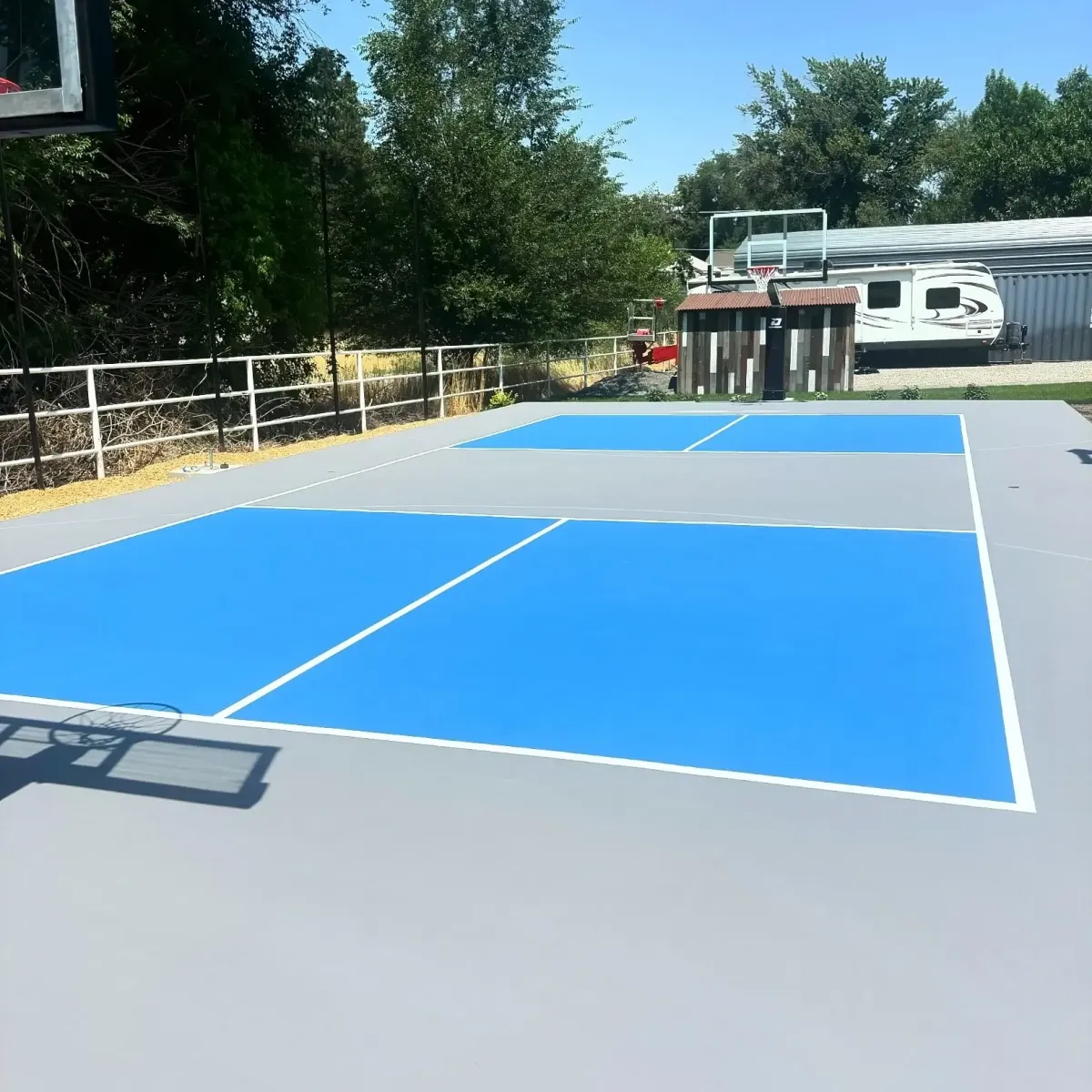
Pickleball Court Layout and Striping Guide
A great court starts with accurate planning, clean geometry, and the right coating system. Understanding Pickleball Court Layout and Striping helps homeowners, HOAs, schools, parks, and recreation facilities create a surface that plays fairly, looks professional, and holds up under regular use. For projects in Northern California, Ace Coatings Sacramento approaches court layout as both a measurement challenge and a surface-performance decision, because even a perfectly measured court can fail if the striping materials do not bond properly.
Pickleball is a fast game built on precise boundaries. The kitchen line affects strategy. The service boxes determine legal serves. The baselines and sidelines shape every rally. When these markings are off by even a small amount, players notice.
That is why quality striping is more than painting lines on concrete or asphalt. It requires correct dimensions, square corners, proper surface preparation, high-contrast color choices, and slip-resistant materials designed for athletic movement.
Understanding Pickleball Court Layout and Striping for accurate court dimensions
A regulation pickleball court measures 20 feet wide by 44 feet long for both singles and doubles play. Unlike tennis, the court size does not change based on the number of players. This makes layout simpler in one sense, but it also means every line must be placed carefully.
The core court markings include:
Baselines: The back boundary lines at each end of the court.
Sidelines: The long boundary lines that establish the 20-foot width.
Centerlines: The lines dividing the left and right service courts.
Non-volley zone lines: The kitchen lines, located 7 feet from the net on each side.
Service areas: The two boxes on each side where serves must land.
All official court lines are 2 inches wide, and measurements are made to the outside of the lines. This detail is easy to miss during DIY layouts. If the tape is placed on the wrong side of a chalk mark, the finished court can end up slightly oversized, undersized, or uneven.
The painted court is only part of the planning process. Players need run-off space around the lines to move safely, recover after shots, and avoid collisions with fencing, walls, landscaping, or adjacent courts. A 30-by-60-foot total surface is commonly treated as the minimum practical playing area, while 34 by 64 feet is preferred for more comfortable play.
Court orientation also matters. Whenever possible, outdoor courts should be oriented north to south to reduce direct sun in players’ eyes. In Sacramento, where long sunny seasons are common, this can make a major difference in comfort and visibility.
Understanding Pickleball Court Layout and Striping starts with square measurements
The most reliable court layouts begin with the outside rectangle. Mark the four court corners, then confirm the court is square before adding interior lines. A common professional method is to measure diagonally from corner to corner. If both diagonal measurements match, the rectangle is square.
For a full 20-by-44-foot court, careful measuring is essential. Small errors at the beginning can throw off the kitchen, centerline, and service boxes later.
A practical layout checklist includes:
Use a long fiberglass tape, not a short household tape.
Mark outside court corners first.
Confirm the 20-foot width and 44-foot length.
Check both diagonals before snapping chalk lines.
Mark the kitchen lines 7 feet from the net line on both sides.
Divide each service area into 10-foot-wide left and right boxes.
Recheck all measurements before applying tape or paint.
The net should measure 36 inches high at the sidelines and 34 inches at the center. Net posts are typically placed outside the sidelines, so post placement should be coordinated with the court layout before striping is finalized.
Understanding Pickleball Court Layout and Striping for materials and surface preparation
Once the layout is correct, the next step is choosing materials that can handle real play. Pickleball involves sharp lateral movement, quick stops, pivots, and repeated shoe friction. Standard exterior paint is not made for that kind of use.
For permanent outdoor courts, 100% acrylic sports coating is typically the best choice. These coatings are designed for court surfaces and can be installed with texture for traction. Line paint should be bright, durable, UV resistant, and compatible with the base court coating.
Temporary tape can work for short-term play, events, or multi-use spaces where lines need to be removed. However, tape is not ideal for permanent outdoor courts. It can lift at the edges, shift over time, collect debris, and create a slight tripping concern.
Permanent striping is usually better for:
Backyard pickleball courts.
HOA recreation areas.
Public park courts.
School and church courts.
Dedicated multi-court facilities.
Tennis court conversions.
Surface preparation is where many court projects succeed or fail. Concrete and asphalt must be clean, dry, and properly profiled before coatings are applied. Paint placed over dirt, mildew, loose material, oil, curing compounds, or moisture problems may peel long before the court should need maintenance.
For concrete, preparation may include pressure washing, degreasing, crack repair, patching, and moisture evaluation. For asphalt, the surface should be structurally sound, free of loose aggregate, and compatible with the selected acrylic coating system.
Sacramento’s hot summers can also affect application timing. Coatings should not be applied to surfaces that are too hot, too damp, or exposed to unsuitable weather conditions during curing. Working within manufacturer guidelines helps prevent blistering, weak adhesion, roller marks, and uneven texture.
Understanding Pickleball Court Layout and Striping improves color and visibility
Good color design is not just about appearance. It affects ball visibility, player reaction time, and line-call clarity. The best court color schemes create strong contrast between the playing surface, perimeter, and lines.
Common combinations include:
Blue playing area with green perimeter and white lines.
Green playing area with darker green borders and white lines.
Slate gray playing area with charcoal perimeter and bright white lines.
Blue or green court body with light-colored pickleball lines on a tennis conversion.
For multi-use courts, color discipline is especially important. If basketball, tennis, futsal, or volleyball lines share the same surface, each sport should have a clear visual hierarchy. The primary sport’s lines should be easiest to read, while secondary markings should use a different color or lower visual emphasis.
When converting a tennis court, pickleball lines should not visually compete with existing tennis lines. A contrasting color can help players quickly identify the correct boundaries. On community courts, this reduces confusion and improves the playing experience for beginners and experienced players alike.
Ace Coatings Sacramento can also evaluate whether an older court needs full resurfacing before new striping is added. Painting crisp new lines over a faded, cracked, or slick surface may improve appearance temporarily, but resurfacing may be the better long-term option if the underlying coating is worn out.
Understanding Pickleball Court Layout and Striping for long-term performance
A professionally striped court should stay readable, safe, and attractive through regular play. That depends on installation quality, material selection, maintenance, and the condition of the underlying pavement.
After striping, the surface should be allowed to cure fully before play begins. Dry-to-touch does not always mean ready for foot traffic. Opening the court too early can scuff fresh lines, weaken the finish, or leave permanent marks.
Routine maintenance helps extend the life of the court. Sweep or blow off leaves, dirt, and debris regularly. Clean spills quickly. Avoid harsh chemicals that can damage acrylic coatings. Keep sprinklers from repeatedly soaking the court, and check drainage after heavy rain.
A simple maintenance routine should include:
Weekly debris removal during active seasons.
Gentle washing when dirt or pollen builds up.
Inspection for cracks, peeling, or fading.
Prompt repair of small surface problems.
Periodic re-striping when lines lose visibility.
Keeping furniture, planters, and sharp objects off the court.
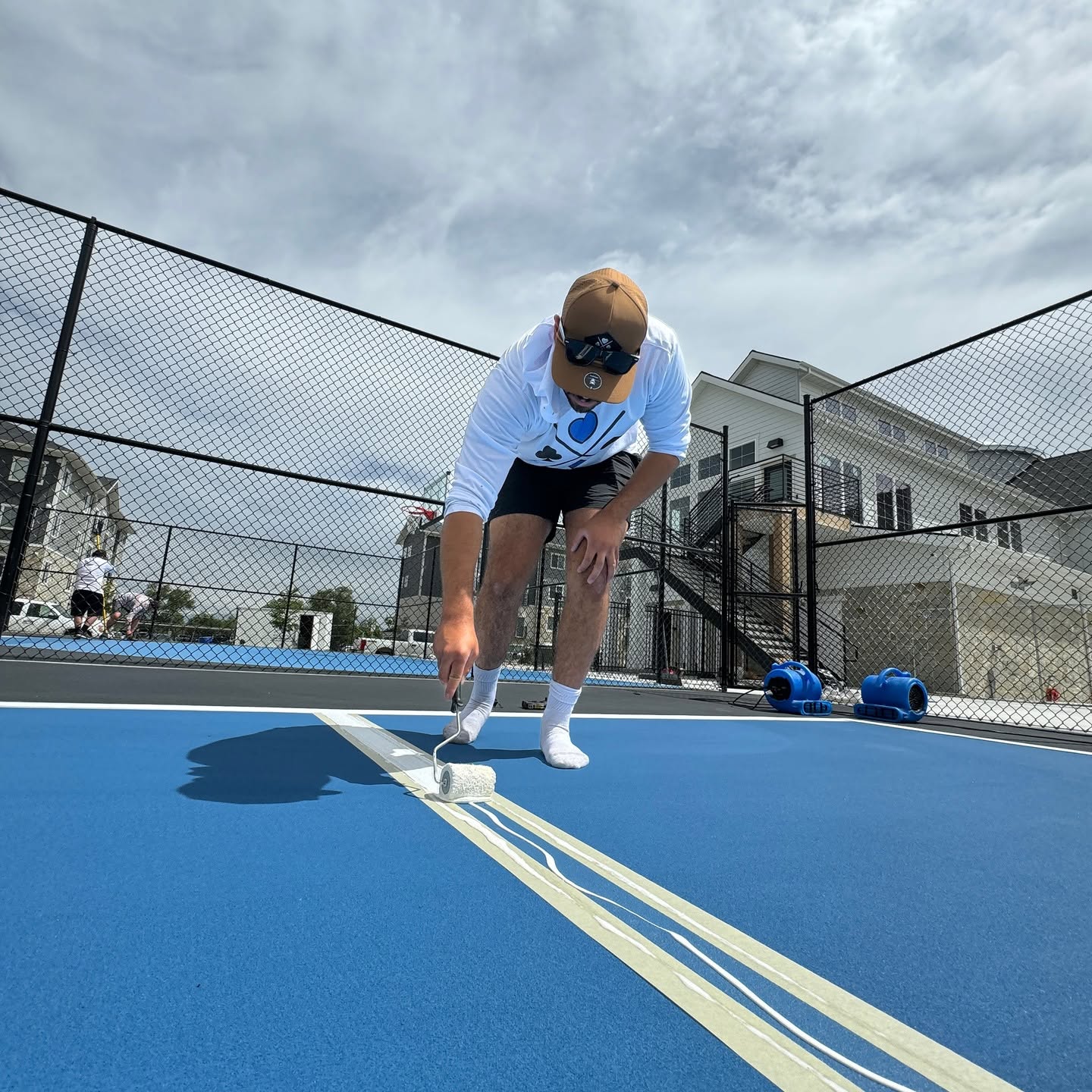
Re-striping should begin with cleaning and inspection, not just a fresh coat of paint. Loose or flaking material should be removed. Existing lines should be checked for accuracy. If old markings were placed incorrectly, they should not be blindly followed.
For crisp results, installers often seal the tape edge before applying the final line color. This reduces paint bleed on textured surfaces and produces cleaner edges. Thin, even coats are better than one heavy coat, because heavy paint can ridge, dry unevenly, or pull when tape is removed.
Understanding Pickleball Court Layout and Striping supports safer play
Safety is one of the strongest reasons to invest in proper striping and court coatings. Lines must be visible enough for players to make quick calls, but they also need texture so shoes do not slide when landing on them.
Slip-resistant acrylic line paint helps reduce the risk of players losing footing during quick movement. This is especially important near the kitchen, where players frequently stop, reset, and shift direction.
Adequate run-off space is another safety factor. A court squeezed into too small an area can force players into fences, walls, benches, or landscaping. Even recreational players need room behind the baselines and outside the sidelines.
A well-planned court should feel intuitive. Players should not have to think about which lines apply, whether the kitchen is the right depth, or whether the surface will grip underfoot. The best striping work quietly supports the game by making the court clear, consistent, and dependable.
In the end, pickleball court striping is a blend of precision and practical surface knowledge. Accurate measurements create fair play. Proper preparation helps coatings last. Strong contrast improves visibility. Slip-resistant materials support safer movement.
For residential, municipal, school, and recreation projects, Ace Coatings Sacramento brings these details together so the finished court is built for real use, not just a clean first impression.
