


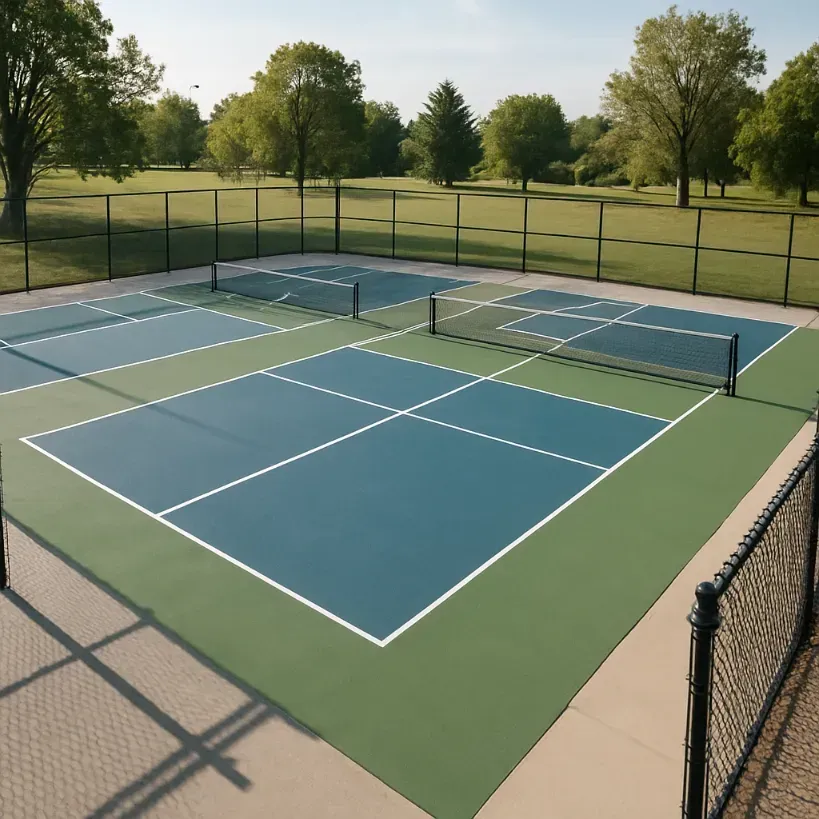
Pickleball Courts per Tennis Court: How Many Can You Fit?
Across parks, clubs, and recreation facilities, tennis courts that once sat quiet are now being reconsidered as high-value community assets. With pickleball participation continuing to surge, facility managers and municipalities are asking a practical question: how do we create more courts without acquiring more land? The answer lies in understanding pickleball courts per tennis court, a conversion strategy that allows one underused tennis court to support significantly more players and activity.
This guide explains exactly how the four-court conversion works, why it’s become the national standard, and what technical and planning factors determine whether a conversion succeeds or fails.
Pickleball Courts per Tennis Court: The Proven 4-to-1 Conversion
The short answer is simple: four pickleball courts fit on one standard tennis court. This is not a rough estimate or creative workaround—it is a layout supported by regulation dimensions and widely adopted across public and private facilities.
A single tennis court can typically support only two to four players at a time. By converting it into four pickleball courts, that same space can host up to sixteen players simultaneously, increasing court capacity by 400%. For communities facing waitlists and overcrowding, this efficiency is the primary driver behind conversion projects.
The four-court configuration is widely accepted because it preserves safe playing distances, proper court dimensions, and realistic game flow when executed correctly.
Pickleball Courts per Tennis Court: Why the Dimensions Work
A regulation pickleball court measures 20 feet wide by 44 feet long, including the non-volley zone. When compared to a standard tennis court footprint, the math aligns almost perfectly. Each pickleball court occupies roughly one-quarter of the usable tennis court area, allowing four courts to fit without compromising safety or playability.
This dimensional efficiency is why professional contractors, including Ace Coatings Sacramento, frequently recommend tennis court conversions as the fastest way to meet rising demand without major construction.
Pickleball Courts per Tennis Court: Layout, Orientation, and Net Placement
Understanding orientation is key to visualising the conversion. Pickleball courts are not placed end-to-end along the tennis net. Instead, the courts are rotated perpendicular to the original tennis layout.
Two pickleball courts are placed side-by-side on each half of the tennis court, creating a symmetrical two-by-two grid. The original tennis net line becomes a shared baseline for all four pickleball courts. Because of this, the tennis net is either removed or lowered flat to the surface.
Portable pickleball nets are then installed to divide each pair of courts. This configuration allows proper net height, accurate spacing, and clear separation between games.
Pickleball Courts per Tennis Court: Safety and Run-Off Space
A successful conversion accounts for player movement beyond the lines. While the four-court layout fits within the tennis footprint, professional installations ensure:
Adequate side clearance between courts
Clear walkways behind baselines
Visual separation through fencing or netting
Installers such as Ace Coatings Sacramento evaluate each site individually to ensure that the layout supports both safety and long-term durability.
Pickleball Courts per Tennis Court: Permanent, Blended, or Temporary Options
Once the layout is understood, the next decision is permanence. Facilities typically choose between three approaches depending on budget, usage patterns, and long-term goals.
Pickleball Courts per Tennis Court: Blended Line Conversions
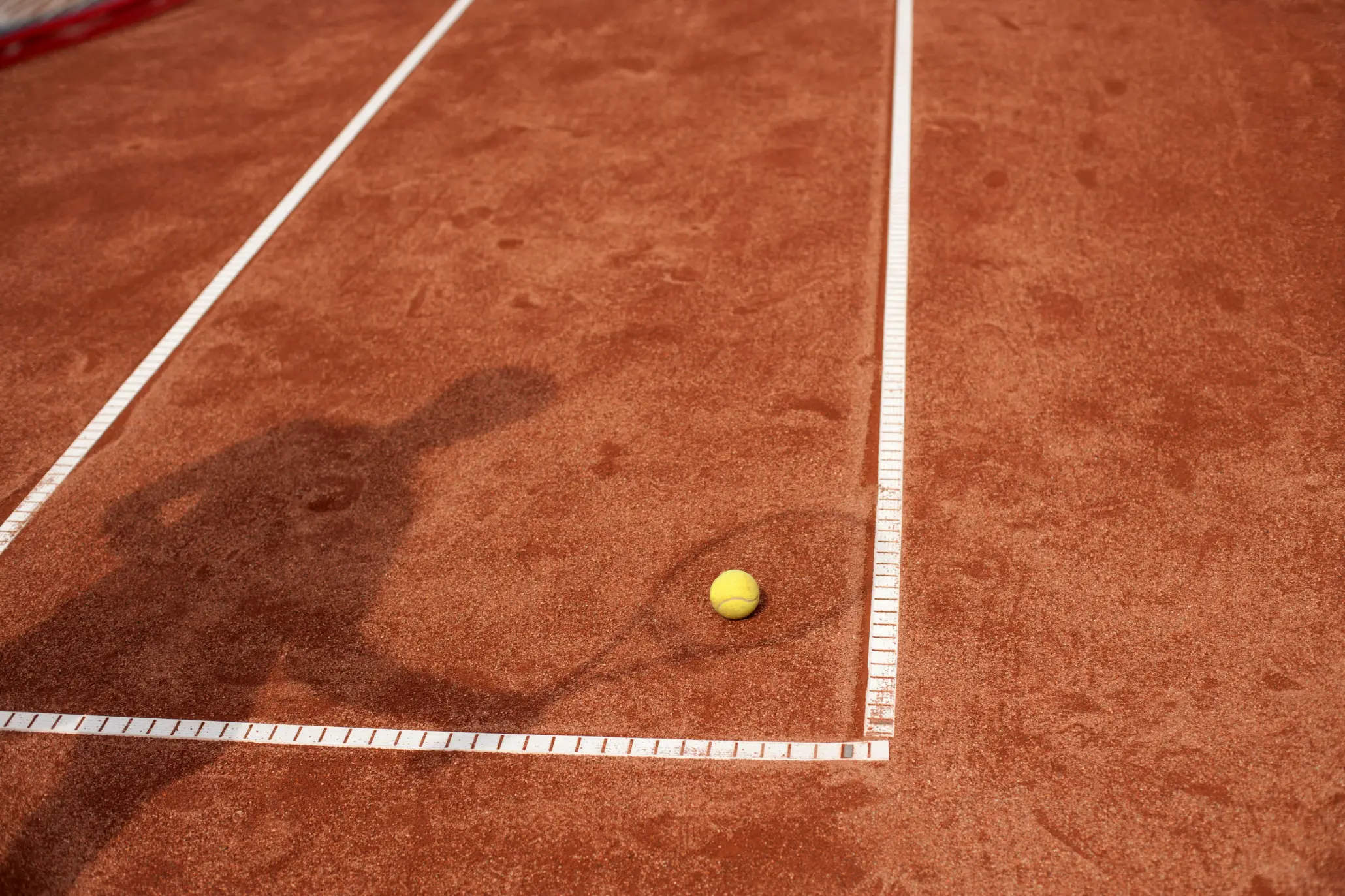
Blended courts retain the original tennis lines while adding pickleball lines in a contrasting color. This is the most common solution for public parks and multi-use facilities, as it allows both sports to coexist.
Blended conversions are cost-effective, flexible, and reversible, making them ideal for communities transitioning gradually.
Pickleball Courts per Tennis Court: Dedicated Pickleball Conversions
Dedicated conversions remove tennis lines entirely and resurface the court with pickleball-only markings. This approach eliminates visual confusion and creates a premium playing experience but permanently removes tennis use.
Facilities working with Ace Coatings Sacramento often choose this option when pickleball demand consistently outweighs tennis usage.
Pickleball Courts per Tennis Court: Temporary and DIY Setups
Temporary conversions using court tape and portable nets allow communities to test demand with minimal investment. While not suitable for long-term use, this approach is valuable for events, demonstrations, or pilot programs.
Costs, Standards, and Professional Guidance
Conversion costs vary based on scope:
Temporary setups: under $100
Professional blended lines: $400–$800
Full resurfacing and dedication: $5,000–$10,000+
Professional installations follow surface preparation and line placement standards consistent with USA Pickleball, ensuring proper spacing, visibility, and play characteristics.
Experienced contractors like Ace Coatings Sacramento also assess surface condition, drainage, and existing cracks before recommending a conversion approach. This prevents premature failure and protects the long-term investment.
From Underused Court to Community Hub
The real value of understanding pickleball courts per tennis court is not just spatial efficiency—it’s community impact. A single converted court can transform a quiet park corner into the most active, social space on the property.
Four simultaneous games mean more participation, shorter wait times, and broader access for all age groups. For cities, clubs, and schools, conversion represents one of the highest-return improvements available in recreational infrastructure.
Professionally planned conversions—especially those executed by specialists like Ace Coatings Sacramento—ensure that growth is sustainable, safe, and enjoyable for years to come.
Final Thoughts
Converting a tennis court into four pickleball courts is no longer a novelty—it’s a proven solution embraced nationwide. When done correctly, it maximizes space, increases engagement, and revitalizes existing facilities without the cost of new construction.
Contact us at Ace Coatings Sacramento to evaluate your site, discuss layout options, and determine the best conversion strategy for your facility.
