


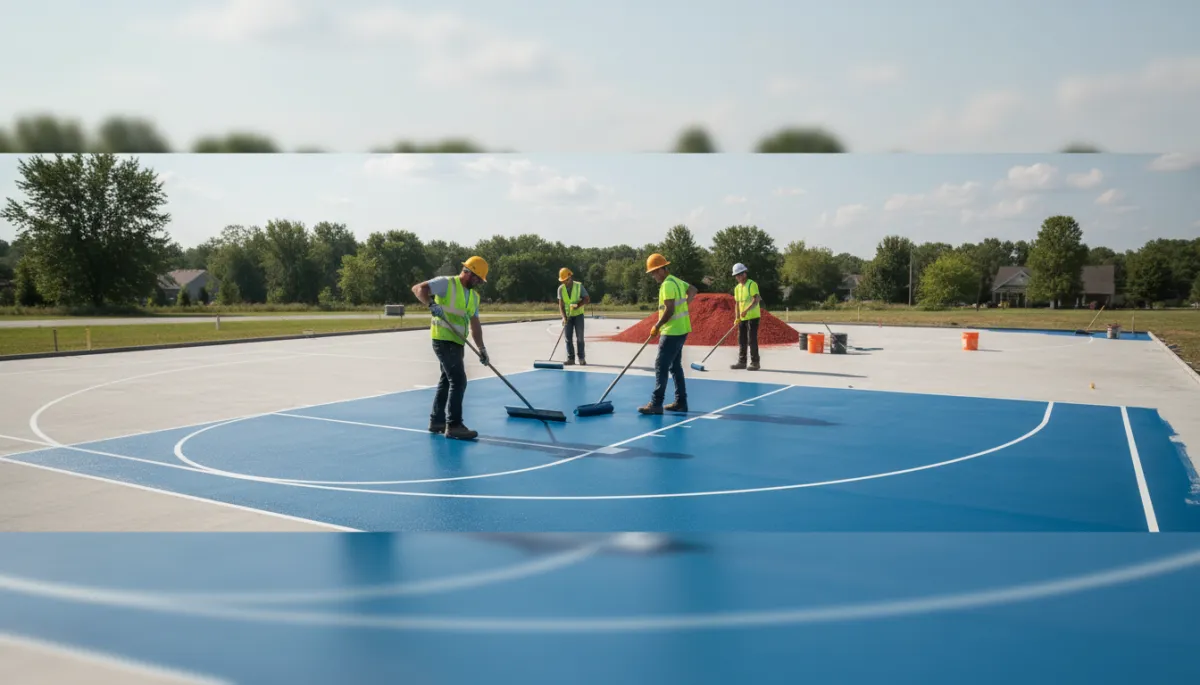
Cut Costs on Your Home Basketball Court Build
Home Improvement, Outdoor Sports, Budget Planning
How to Reduce the Cost of Building a Basketball Court at Home
Building a home basketball court is a dream for many families, but the price tag can feel intimidating. The good news is, with smart planning and a few strategic compromises, you can significantly cut costs without ending up with a flimsy, short‑lived court. Here’s how to make your home court affordable while still safe, durable, and fun to play on.
Start with a Clear Budget and Court Purpose
Before you pour a single yard of concrete, decide what you really need from your court. Are you building a full regulation court for serious training, or a half court for casual family games and driveway pickup? A smaller footprint can instantly reduce excavation, materials, labor, and even long‑term maintenance costs.
Half court vs. full court: A half court can cost 30–50% less, yet still offers plenty of space for shooting, dribbling, and one‑on‑one play.
Multi‑use space: Consider a surface that can double as a patio, kids’ play area, or parking pad to get more value from the same slab.
💡 Pro Tip: Sketch your yard to scale and tape off the planned court area. This helps you visually confirm how much space you truly need before committing to costly site work.
Choose Cost‑Effective Court Dimensions and Layout
Regulation dimensions are nice, but not mandatory for great play. Many homeowners save thousands by trimming the size slightly while keeping the key areas—free‑throw line, three‑point arc, and key—accurate and well‑marked.
Use a reduced‑width court (for example, 25–30 feet instead of 50) if your yard is narrow. You’ll still enjoy realistic shooting practice without the full‑scale expense.
Align the court along existing hardscape or driveway to reuse flat areas and reduce grading costs.
Pick the Right Surface: Balance Upfront Cost and Longevity
The playing surface is usually the biggest line item. For most homeowners, a simple, well‑poured concrete slab offers the best mix of affordability, durability, and low maintenance. Asphalt can be cheaper up front, but it often needs more repairs and can soften in hot climates.
Plain concrete first, upgrades later: You can start with a basic slab and add color coatings, lines, and performance finishes once your budget allows.
Avoid cheap, thin slabs: Cutting thickness too far can lead to cracks and costly repairs. It’s cheaper in the long run to pour a properly reinforced slab once.
Working with experienced local pros, such as Ace Coatings Sacramento, can help you choose a surface system that fits your budget now while protecting you from frequent fixes later.
Save by Simplifying Features and Accessories
It’s easy to overspend on extras: elaborate lighting, tall fencing, multiple hoops, and custom logos can all inflate your budget. Focus on the essentials first, and treat everything else as a future upgrade.
Start with one quality hoop instead of two. A sturdy, adjustable system gives kids and adults years of use without needing a full‑court setup.
Use simple line markings (free‑throw, key, three‑point arc) instead of elaborate custom graphics. You can always add team logos later.
Consider solar or motion‑sensor lights mounted on nearby structures instead of installing full stadium‑style lighting.
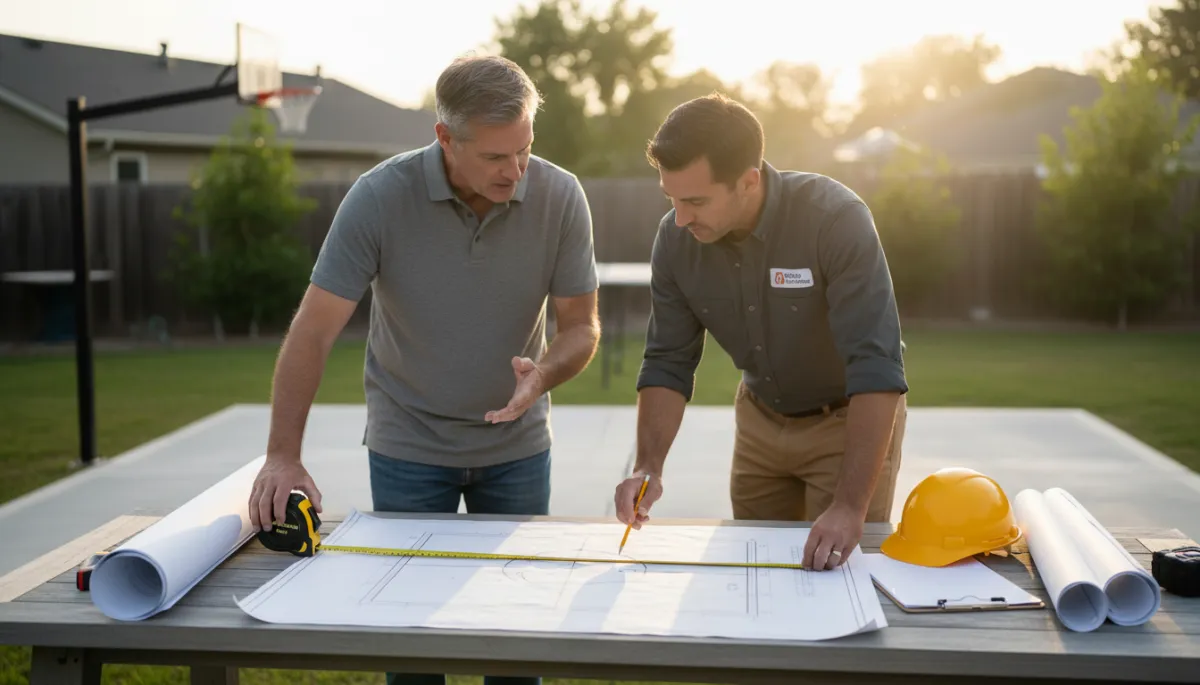
Careful planning with a contractor can trim unnecessary features and costs.
Use DIY Where It Makes Sense—But Not Everywhere
You don’t have to do everything yourself to save money. Instead, split the project into professional and DIY phases. Let licensed pros handle the structural, safety‑critical work, and then take on the finishing touches you can reasonably manage.
Hire professionals for grading, drainage, and concrete. Mistakes here are expensive to fix and can affect play quality and safety.
Consider DIY for painting lines, assembling the hoop, and basic landscaping around the court, as long as you follow good instructions and use quality materials.
💡 Pro Tip: Ask your contractor if you can save by doing site cleanup, hauling debris, or simple prep work yourself. These labor hours add up quickly.
Get Multiple Quotes and Ask About Phased Projects
One of the simplest ways to reduce the cost of building a basketball court is to compare estimates. Prices can vary widely between contractors, and some are more flexible about scaling or phasing a project than others.
Request itemized quotes so you can see exactly where your money is going and identify areas to cut or postpone.
Ask about phased installation—for example, pour the slab this year, then add coatings and upgraded hoops next year.
Reputable local companies often provide no‑obligation quotes. You can get free estimate information to understand what’s realistic for your space and budget before committing.
Think Long‑Term: Cheap Today Can Be Expensive Tomorrow
Reducing costs doesn’t mean cutting corners that will haunt you later. The most budget‑friendly court is one you only have to build once. Spending a bit more on proper drainage, a level base, and durable coatings can prevent cracks, pooling water, and slippery surfaces that require constant repair.
By prioritizing smart sizing, a practical layout, solid foundational work, and phased upgrades, you can enjoy a safe, attractive basketball court at home without overspending. With thoughtful planning and the right local partners, your driveway or backyard can become the go‑to spot for family games, practice sessions, and neighborhood shoot‑arounds—on a budget that actually works for you.
